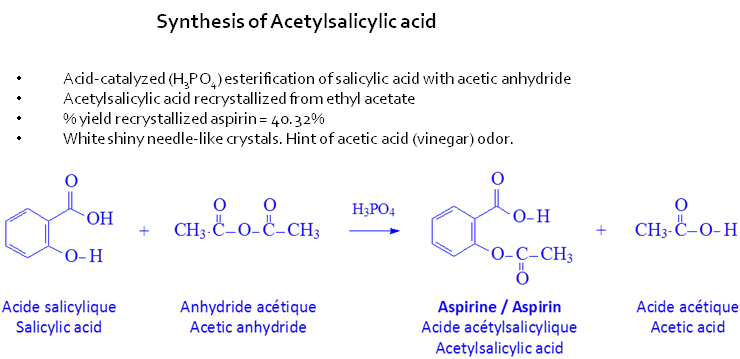
| Example of the format of a slide for an oral presentation |
 |
Biodiesel |
| 1. Introduce the topic of your presentation, why is it important, division of the presentatation, introduce presenters |
| 2. What is biodiesel? Provide a description, its structure, its importance, compare with diesel, etc. (you may add other points if the time permits) |
|
3. Discuss a few important points about the history of biodiesel. For example, when was it first synthesized and
by whom, etc.? |
| 4. What are some other alternative energy sources and why is it important to develop and use alternative energy sources? |
Synthesis and analysis of biodiesel |
5. Discuss how you will prepare biodiesel
|
6. Discuss how you will analyze biodiesel using :
|
|
7. Conclusion |
| 8. Future directions: Discuss a few advantages and disadvantages (limitations) to the use of biodiesel as an alternative energy source. Do you think biodiesel is a viable alternative energy source? Why or why not? Please make sure that your answer is well thought out. |
| Table 2. Evaluation of criteria for the oral presentation Note that marks may be adjusted to take into consideration the involvement of each team member as indicated on the Degree of Involvement form: "[The] involvement, expressed as a percentage, will constitute a basis for the individual mark given in the final evaluation of this project. If a consensus is not obtained, you professor may ask you to present your points of view." | ||
| Équipe / Team : | Pondération Value (%) | Note Mark |
| Description | ||
| Contenu scientifique et rigueur / Scientific content and thoroughness (80%) | ||
| 1. Exactitude du contenu scientifique / Accuracy of scientific information | 60 | |
a. Introduction | ||
b. Biodiesel / Biodiesel | ||
c. Synthèse et analyse du biodiésel / Synthesis and analysis of biodiesel | ||
d. Conclusion - synthèse des idées, invitation à élargir le débat vers l'avenir / Conclusion - synthesis of ideas, future directions | ||
| 2. Clarté, précision, cohérence et organisation / Clarity, precision, coherence/unity and organization | 20 | |
| Forme / Form (20%) | ||
| 3. Dynamisme de la présentation / Delivery | 5 | |
| 4. Utilisation des supports visuels / Use of visual aids | 5 | |
| 5. Qualité de la présentation (aspect soigné, lisibilité, organisation, format du texte, tableaux, figures, graphiques, etc. ) / Presentation quality (neatness, legibility, organization, format of text, tables, figures, graphs, etc.) | 5 | |
| 6. Médiagraphie : style, format, crédibilité, présence des sources appropriées / Referencing: style, format, credibility, presence of appropriate sources | 5 | |
| Qualité de la langue - 0.1 de pénalité par faute sur l'ensemble des évaluations de l'épreuve synthèse du programme (sera retranché du total) Language quality - 0.1 mark per mistake on all of the evaluations of the program comprehensive assessment taken as a whole (will be taken off from the total mark) | Max -10% | |
| Code vestimentaire approprié / Dress code followed | ||
| Autre / Other | ||
| TOTAL | 100 | |